NVnvidhu

MSE Robotics @ Penn · Philadelphia, PA

Nandagopal Vidhu

Robotics Engineer // Motion Planning & Controls

I'm a robotics engineer working on motion planning and controls. So far, that's spanned automotive chassis control, field robotics, and research at Penn. I work mostly in C++ and Python.
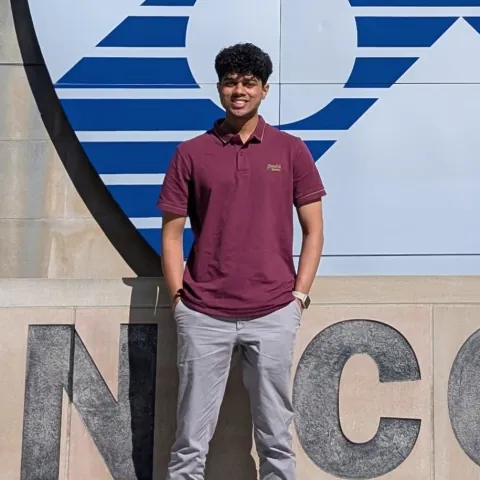
Portrait of Nandagopal Vidhu
39.952°N 75.193°W

Education

  • University of PennsylvaniaUniversity of PennsylvaniaMSE Robotics · 2025–27

  • IIT BombayIIT BombayBachelor's, Mech. Eng. · 2018–22

Experience

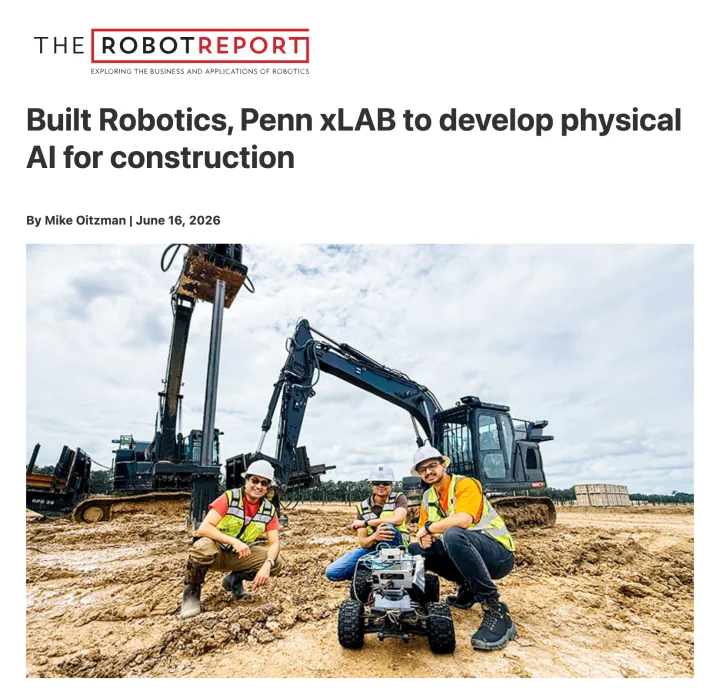
  • Built RoboticsBuilt RoboticsRobotics Engineer Intern · 2026

  • JLR (Jaguar Land Rover)Jaguar Land RoverSystems Engineer · 2022–25
RoboRacer F1/10 final race
1stof 17 teams
Autonomous pile survey, 50 piles
1.9cmmean elevation error
Survey robot vs. manual rod crew
12×faster
Sampling-based MPC in JAX
34Hzreal-time MPPI
Active-suspension MPC
>30%ride comfort (ISO 2631)

// 02 · Industry & research

Work

Built Robotics · Robotics Engineer Intern · Jun–Aug 2026

Autonomous ground robot for solar site surveys

A two-person project that took a 1/5-scale autonomous vehicle from bare chassis to live deployment on a solar job site, replacing manual rod surveys.
  • 1.9 cmmean elevation error
  • 12×faster than manual
  • 34 HzMPPI on-vehicle
  • 35 → 9 cmcross-track error
  • Wrote the ROS 2 finite-state machine and motion planner in Python/JAX: curvature-feasible paths through every survey point, tracked by a sampling-based MPPI controller running in real time at 34 Hz.
  • Traced a 3.2 Hz steering oscillation to actuator lag, then retuned the controller to cut cross-track error from 35 cm to 9 cm.
  • Fused RTK-GNSS/INS with a time-of-flight sensor: 50 piles surveyed at 1.9 cm mean elevation error, 12× faster than a manual crew.
  • Ported Theia, Built's AI personnel-detection system, to the Jetson Orin AGX for real-time braking.
  • Built the vehicle end to end: custom 1/5-scale chassis, isolated custom power board, enclosure, $9.6k BOM and sensor calibration.

ROS 2PythonJAXMPPIJetson OrinTensorRTRTK-GNSS/INSSensor fusion

Live mission at 5× speed: the robot tracks its planned route across 50 piles (top) with chase and onboard cameras (bottom). It ends with the fused GNSS + ToF terrain map and per-pile error against ground truth.
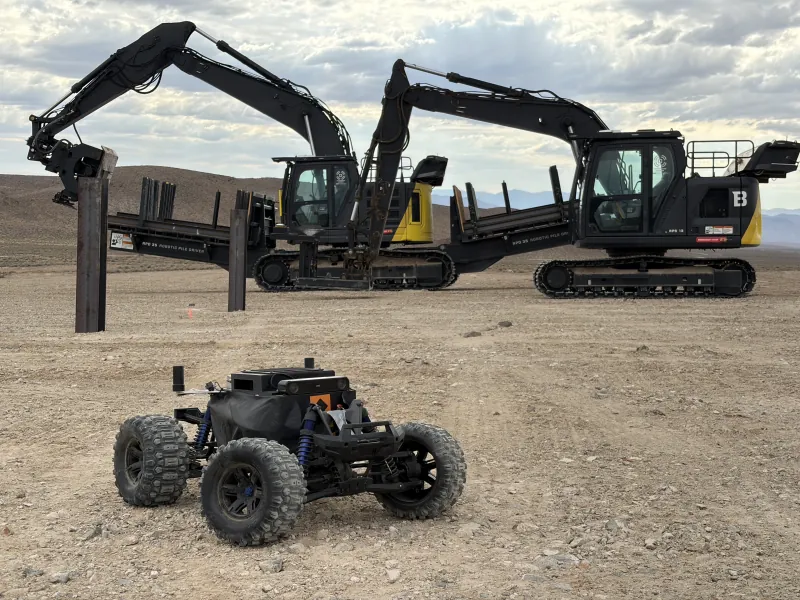
The 1/5-scale survey robot on a Nevada solar site in front of two Built Robotics robotic pile drivers
The survey robot on site in Nevada, with Built's RPD 35 robotic pile drivers behind it.
System architectureSurvey robot autonomy stack (simplified)
Survey robot autonomy stack RTK-GNSS/INS feeds the state estimate, which feeds the ROS 2 mission state machine and path planner. An MPPI controller in JAX at 34 Hz drives steering and throttle. A camera feeds Theia person detection on the Jetson Orin AGX, which triggers the brake. A time-of-flight sensor is fused with GNSS/INS to produce per-pile elevations, 50 piles at 1.9 cm mean error. SENSEPERCEIVE / ESTIMATEDECIDECONTROLACT / OUTPUT pose · mode person in path → stop per-pile elevation RTK-GNSS / INScm-level pose Cameraforward RGB ToF sensorrange to pile top State estimatepose · heading · speed Theia detectorpeople · Jetson Orin AGX Survey fusionGNSS/INS + ToF Mission FSMROS 2 · drive/measure Path plannercurvature-feasible MPPIJAX · 34 Hz Steer/throttleactuators Brakesafety stop Survey CSV50 piles · 1.9 cm

Master's thesis · Prof. Rahul Mangharam, Penn xLAB · 2026–27

Learning-to-optimize for planning and control of wheeled-legged quadrupeds

Learning-based planning and control for a robot that can both roll and step, from training in simulation to hardware.

  • Training RL policies in Isaac Sim / Isaac Lab for wheeled-legged locomotion, including stair climbing and rough terrain.
  • Deploying these policies on a Deep Robotics M20 wheeled quadruped, and bringing up its control stack with camera and LiDAR.

Reinforcement learningIsaac LabMuJoCoDeep Robotics M20ROS 2

In progress

Policy rollout on the Deep Robotics M20 model in MuJoCo, on a stair and ramp course.

Jaguar Land Rover (TBSI) · Systems Engineer · Jul 2022 – Aug 2025 · Bangalore

Active-suspension control & seating systems

Three years across chassis R&D and system-level vehicle development, from model-based controller design to hardware-in-the-loop validation.
R&D in suspension controls for chassis active systems

  • Derived and validated a linear state-space model of full-vehicle vertical dynamics with four coupled actuators.
  • Designed and tuned an MPC controller over that model, improving ISO 2631 weighted ride comfort by more than 30%.
  • Developed a novel estimation and control strategy that uses the measured front-axle response as preview for the rear axle.

System-level development & validation of seating systems

  • Built and commissioned a hardware-in-the-loop rig, keeping validation of Jaguar's 2026–27 lines on schedule.
  • Automated test-case validation and requirements tracking, cutting turnaround from hours to minutes. JLR Creator Award.
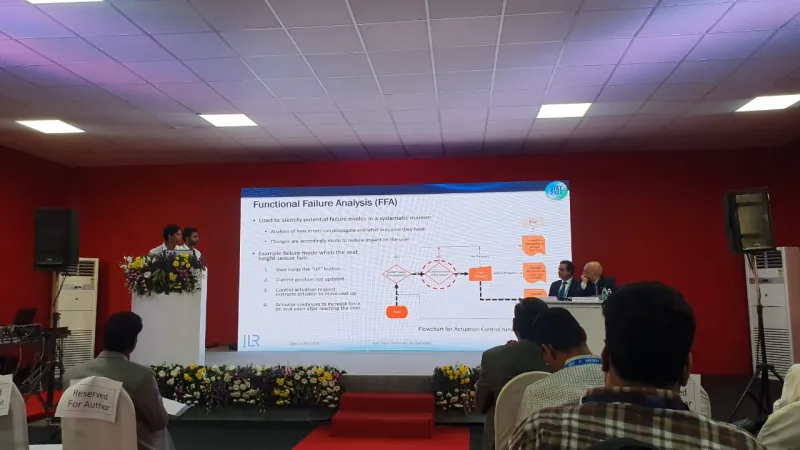
  • Authored 2 SAE technical papers and presented at SIAT 2024 to 50+ engineers, suppliers and researchers.

MPCState estimationMATLAB/SimulinkCarMakerHIL/SiL/MiLCAN

Track testing at JLR.
Presenting a functional failure analysis on stage at the SIAT 2024 conference
Presenting at SIAT 2024.
Control architectureFully active suspension with rear-axle preview (simplified)
Active suspension MPC with rear-axle preview Road disturbance acts on the vehicle's vertical dynamics. Body IMU and wheel and suspension sensors feed a state estimator. The estimated state, plus a rear-axle preview derived from the measured front-axle response, feeds an MPC built on a linear full-vehicle model. The MPC commands four active actuator forces. Result: more than 30 percent better ISO 2631 weighted ride comfort. F₁…F₄ measurements x̂ front-axle response Road disturbanceunknown profile Rear-axle previewfront response,delayed by L / v MPClinear full-vehicle model4 coupled actuators Active actuatorsforce per corner Vehiclevertical dynamicsbody + 4 wheels Sensorsbody IMU · wheel/susp. State estimatorbody + wheel states >30%ride comfortISO 2631-wtd

// 03 · Projects

Projects

Penn ESE 6150 · Team of 4 · Jan–May 2026

RoboRacer (F1/10) autonomous racing: 1st of 17 teams

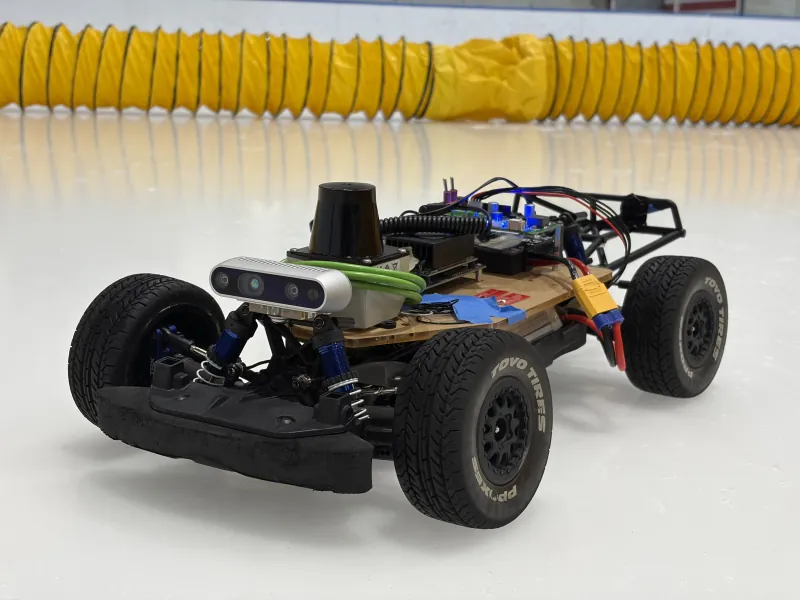
A semester on a 1/10-scale racecar with an onboard Jetson, LiDAR and camera, ending in a head-to-head race.
  • 1st / 17final race
  • 17%faster laps
  • 10 HzTensorRT classifier
  • Won the final race with a pure-pursuit controller with adaptive lookahead and obstacle avoidance.
  • Built the stack in C++ and Python: SLAM mapping, particle-filter localization, RRT planning and MPC trajectory tracking.
  • Developed a vision-based friction-aware controller (MobileNetV3, TensorRT). It laps 17% faster and stays stable on surfaces where the baseline spun out.

C++PythonROS 2SLAMParticle filterRRTMPCTensorRT

The F1/10 racecar with LiDAR and depth camera on an ice rink
Testing on the ice rink, where friction changes under the car mid-lap.
ROS 2 graphPredictive, vision-based friction adaptation (simplified)
Friction-aware racing pipeline A RealSense camera frame is cropped to the ground ahead, classified by MobileNetV3-Small on TensorRT at 10 Hz, and smoothed by a 5-frame majority vote into a friction tier. The tier swaps the pure pursuit parameter profile and regenerates the raceline speed profile. LiDAR feeds SLAM and a particle filter for pose. Pure pursuit outputs Ackermann drive commands. /surface/friction regenerate v-profile /pf/pose/odom RealSense640×480 RGB Ground ROI30–50 cm ahead MobileNetV3-STensorRT FP16 · 10 Hz Majority vote5 frames → tier Racelinev = √(a_lat / κ) 2D LiDARscans SLAM map + particle filterlocalization Friction-awarePure Pursuitprofile: v, a_lat, a_lon, Ld /driveAckermann low | med | high

RL

PPO from scratch: MuJoCo Walker

Hand-coded Proximal Policy Optimization with no RL libraries, then trained it to make the MuJoCo Walker walk.

PythonMuJoCoPPO

Control

MPPI locomotion on the true simulator

Sampling-based MPC (MPPI and MJPC-style predictive sampling) that uses a copy of the MuJoCo simulator as its dynamics model and the exact task reward as its objective. There is no learning and no surrogate model. One body-agnostic planner drives both the DM-Control walker and a Unitree Go2.

PythonMuJoCodm_controlMPPI

Code ↗

MLPenn BE 5210

Decoding hand movement from ECoG

Regresses continuous five-finger flexion from raw intracranial brain signals with per-subject temporal convolutional networks. It reached r ≈ 0.68 on the held-out leaderboard, against 0.40 for a linear baseline.

PyTorchTCNSignal processing

Code ↗
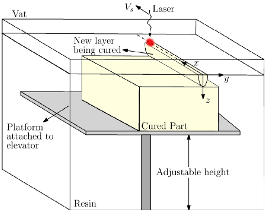
Schematic of a stereolithography printer: laser curing a new resin layer on a part attached to an elevator platform

PublicationIIT Bombay thesis

A computational model for SLA 3D printing

A bachelor's thesis modelling how material and process parameters drive print speed and part quality in stereolithography. Published in Progress in Additive Manufacturing (Springer, 2024) and cited 20+ times. Bachelor's Thesis Research Award, 1 of 11 among 1000+ students.

Paper ↗

// 04 · Lab & field

From the lab and the field

// 05 · About

About

I'm a robotics engineer working on motion planning and controls. So far, that's spanned automotive chassis control, field robotics, and research at Penn.

I'm doing my MSE in Robotics at Penn, where my thesis with Prof. Rahul Mangharam is on learning-to-optimize for planning and control of wheeled-legged quadrupeds. Last summer at Built Robotics, I wrote the ROS 2 motion planner and MPPI controller for an autonomous survey robot that measured 50 pile locations to 1.9 cm accuracy, around 12× faster than a manual crew. Before Penn, I spent three years at Jaguar Land Rover as a systems engineer.

I work mostly in C++ and Python, and I'm most interested in planning, controls and navigation.

Education

University of Pennsylvania2025–2027

MSE in Robotics · GPA 3.95/4.0

$58,000 merit scholarship (JN Tata Endowment, Narotam Sekhsaria Foundation). Coursework: Learning in Robotics, Machine Perception, Embedded Systems, Kinematics & Dynamics, Control Theory.

IIT Bombay2018–2022

Bachelor's in Mechanical Engineering · GPA 3.93/4.0

Bachelor's Thesis Research Award (1 of 11 among 1000+ students). Narotam Sekhsaria Foundation UG Engineering Scholarship.

// 06 · Contact

Let's build robots that move well.

I'm looking for robotics software roles in planning, controls and navigation. The fastest way to reach me is email.